Stories
Jul 29, 2026
Close-Up Summer Residency Winner 2026: Kayleigh Corcoran on Coming In as an Irish Traveller, and How You Can Support I'm Always Here
.jpg)
This summer, 19 year old Kayleigh Corcoran joined the Close-Up Summer Residency 2026, a week-long programme at The Deerstone Eco Hideaway in Laragh, Co. Wicklow. Designed to support emerging filmmakers from ethnically diverse backgrounds, the residency offers mentorship and industry guidance to develop short film ideas from a spark into a pitch. Kayleigh, the first Irish Traveller to take part in our Close-Up Summer Residency and was awarded €2,500 in seed funding for her project I'm Always Here, the story of a 1990's summer friendship between an Irish Traveller boy and his Latin American best friend, as family expectations begin to pull them towards very different futures. She spoke to our Digital Marketing and Communications Executive, Eilís Walsh, about coming into the week, the people she met, and the film that lies ahead. Edited only for length and clarity. Kayleigh's answers are kept close to her own words.
.jpg)
You came into the residency as the first Irish Traveller to take part. How did that feel, and did the week match what you expected?
As a Traveller, I was really worried coming in. We're not often seen in places like this, and when we are, it can feel like we're just shoved off into the background. I was worried that would happen, that I'd be put to the side while everyone focused on something else, and I'd just be there doing my own thing. It wasn't like that at all.
I do a lot of research into what I'm going to do, because I get very anxious, so I try to make sure I know what I'm doing. But even with that research, my expectations were matched and more as well. Everything that happened blew my mind. I expected it to be calm, but also corporate, and even with that in my mind, what we did was even more than that. Obviously there were the more corporate aspects, with the facilitators, where we were learning. But then we were also a giant family together that week, and that feeling, I didn't expect that at all.
You were filmed and shadowed throughout the week for a video about the residency. What was that experience like?
I had to hype myself up a bit to agree to it, because I'm the type of person that's like, get the camera away from me. But I knew it was for something important, and that I need to put myself out there a bit more. So when Jite mentioned it on the first or second day, I agreed, even though I was really worried.
I was expecting him to be on my shoulder the entire time, but it really wasn't. It was so calm, he was just floating in the background like a fly, you didn't notice him at all. When I saw the video I was like, I remember him being there for that, but I do not remember him filming me there. So he did it in a way that really didn't disturb you at all.
The days were intensive. Was there a session that pushed you out of your comfort zone creatively?
I really enjoyed all the sessions, but the biggest one for me was the pitching practices and the pitching one-to-one that we did. I'm a very anxious person, and in college I actually failed my module on pitching and presentation and all that. So having those sessions where they made us get up and actually do it, and they sat back and critiqued us, it really, really helped, but I was terrified.
But then afterwards, and during it, I realised that I needed to do it, and it was a very, very important step.
I've been working on this project since secondary school, so I'd been stuck on it for a while, getting the scenes and getting inspiration for, well, what happens after this, how does this link up.
So being there in the residency, my main thing was actually talking with Aisha and Grace. They really, really helped me. In the pitching sessions, having their minds focused specifically on the gaps in my story, or where I'm not doing too well in certain areas, that really helped.
.jpg)
You spent the week with creatives from different backgrounds, many you'd never met. What stood out about developing your idea alongside them?
The biggest thing was that we all kind of realised we were just the same. We had our differences, but we all had something that related to one another, and we used that to deepen the relationship between us. We all got along pretty quick. as the week went on, especially with Culture Night, we all dove deeper into our own personal lives and realised we had lots of links.
A big priority for everybody was helping each other with our projects, having the space to be together and work on each other's projects and help one another, that was a really big thing. It was very comforting.
Your story draws heavily on your own Traveller heritage, and centres on a cross cultural friendship between James and Pio. What drew you to that friendship specifically?
Originally it just kind of popped into my mind. But then when I thought about it more, I realised that I'm part of two different cultures. My mam's a Traveller, my dad's not, and I grew up in between both cultures, seeing how badly they interacted with one another and how they just didn't really mix. The thing is, I think they were afraid to try to get along with one another, and the lines that people drew before them lingered.
The Traveller community have always been very closed off, but I've noticed a lot now that they've kind of started linking up with others, especially the younger generation. My cousin recently married into a Portuguese, Hispanic family, and they have their own family together now. When they first started going out it was a really big thing in my family, and a lot of the older generation would be terrified, like, what will happen to our culture, will they mix well, will they not, will his culture be the biggest thing. But then we all kind of realised they're just together for love at the end of the day. They're not here to overpower each other with their cultures.
So when I was thinking of that, and thinking of how I was raised, I was like, this would be a really good idea. Not only to show off the cultures and show, oh yeah, this is us, this is our representation, but also, oh, we can actually get along, and ease the fear of our culture being eradicated.
Are there particular cultural details you're determined to get right on film?
The biggest thing would be the sets, mainly. When I watch a film and I see someone in a certain location, I'm always like, oh yeah, that's where I live, or that's this. I feel like it's very important for people to see that, oh yeah, that's actually true, that's not wrong, you know.
I plan to film where my granddad lives. He lives in Galway, and having that as where James lives is really important to me, because it's not just some fake thing I've pulled together last minute. And then for Pio as well, with the Latin American communities, I've been reaching out to a lot of them here in Ireland and asking if I can film with them. Especially since during the 90s there weren't a lot of Latin Americans, having a more niche, community atmosphere to it can be very important. Because if someone's grandparent, their auntie, their uncle, their mam or dad grew up in that time period, and something was wrong, I'd feel horrible, like I'm showing some unrealistic version of how they actually experienced it. So locations and set design are probably the biggest thing for me.
.jpg)
Research clearly matters to you. Which organisations have you reached out to?
A few. For travellers, a lot of it was my own family, National Traveller Men's Forum, and the Galway Traveller Movement. They were my main helpers, because my family is very involved with them.
And then for the Latin American ones, Latina Resilience were one of the businesses I've worked with. They were actually the first to ever reach out to me in this entire process. They messaged me on WhatsApp and Instagram, asking if they could repost my work and they also gave me some names to interview. That was very, very helpful. And then there was Radio Latina Dublin.
If a young Irish Traveller came to you, nervous about applying because of how the community has historically been treated by the media, what would you say?
I'd tell them to apply, definitely. Coming in I was worried, but then I got in and realised this is a place for people to be brought together and not pushed apart. So I'd say get out there, do it, and don't let the fears linger in your mind. And if you can't help it, have a chat with somebody, because the GORM staff are very helpful. You guys are very open to having a chat with everybody, if they're feeling a bit stressed or even if we missed home. I went ahead with it, and I couldn't be happier. I couldn't be more proud of myself for actually doing it.
.jpg)
The film is ahead of you now, with a screening planned for the GORM Gathering 2026. You're fundraising and looking for collaborators. How can people support you and I'm Always Here?
At the moment I have a GoFundMe up, and that's slowly making some progress. I'd like to pay my actors a lot more than what I have at the moment, and then obviously location, and even paying my editor a bit more. I have the seed funding from GORM, but having that little bit extra is really helpful, to push it that step further. So share the GoFundMe, and also just talk about it. And especially with it going to be at the GORM Gathering, getting a ticket and coming along would be nice, having people there to actually watch it and support.
The biggest thing for me would be the Latin American community. Because I'm not too engaged in the community itself, having people from the community reach out and ask to give a hand on set, or help with some background research, or even just offer any information they can think of would be really, really helpful.
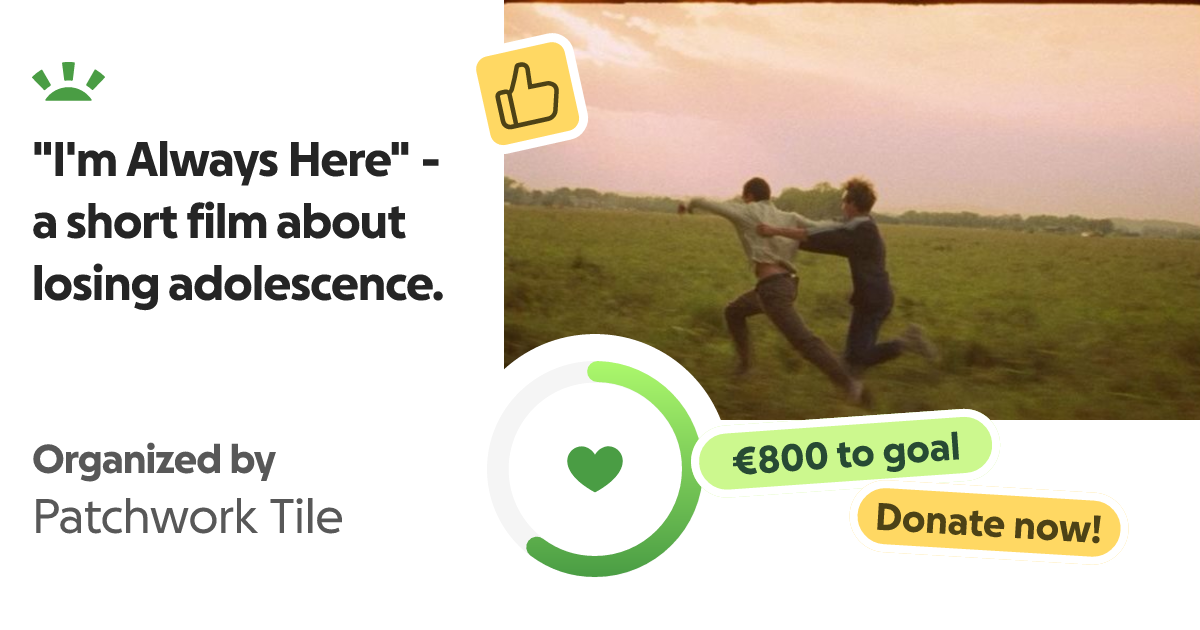
Click the image if you'd like to donate to Kayleigh's fundraiser for the short film.
Photos: Jite Birhire
Proudly supported by The Arts Council / An Chomhairle Ealaíon Fís Éireann/Screen Ireland and the Media Skills and Development Programme operated by Coimisiún na Meán alongside the Ireland Against Racism Fund from Department of Justice, Home Affairs and Migration.
Eilís Walsh, a Limerick-based photographer and digital marketing executive, specialises in diverse freelance photography and personal socially engaged work exploring themes like mental anguish, relationships, and urban life. Notable projects include 'The Night Doesn't Belong To Us' in 2024, 'Patchwork' and 'Áthra' in 2018, and 'You are not just a statistic' in 2019, a socially engaged photojournalism project on men's mental health in Limerick. As the Digital Marketing and Communications Executive of GORM, Eilís communicates GORM’s message to our external stakeholders, clients and community.

.png)